What tea is
Every true tea, from the palest white to the darkest pu-erh, comes from the leaves of a single evergreen shrub. What happens to those leaves after picking is what makes them different.
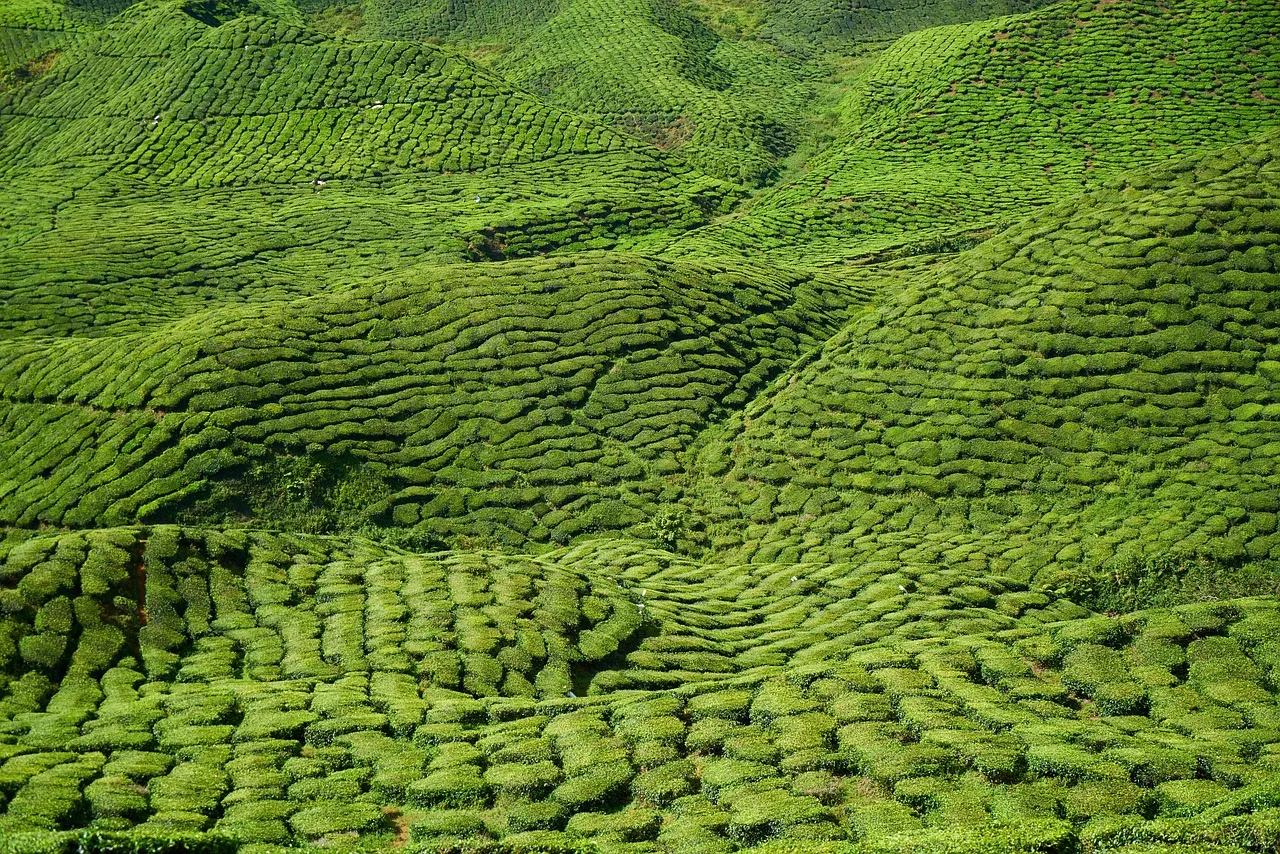
Tea is the second most consumed drink in the world, after water. Billions of cups are poured every day, in glass tumblers in Istanbul, in paper cups on Indian railway platforms, in small porcelain bowls in Chinese tea houses and in mugs on Swedish kitchen tables. For something so ordinary, it is surprisingly easy to misunderstand. This chapter covers the basics: the plant, where it grows, how a fresh leaf becomes dry tea, and why a green tea and a black tea taste so different when they come from the same bush.
One plant: Camellia sinensis
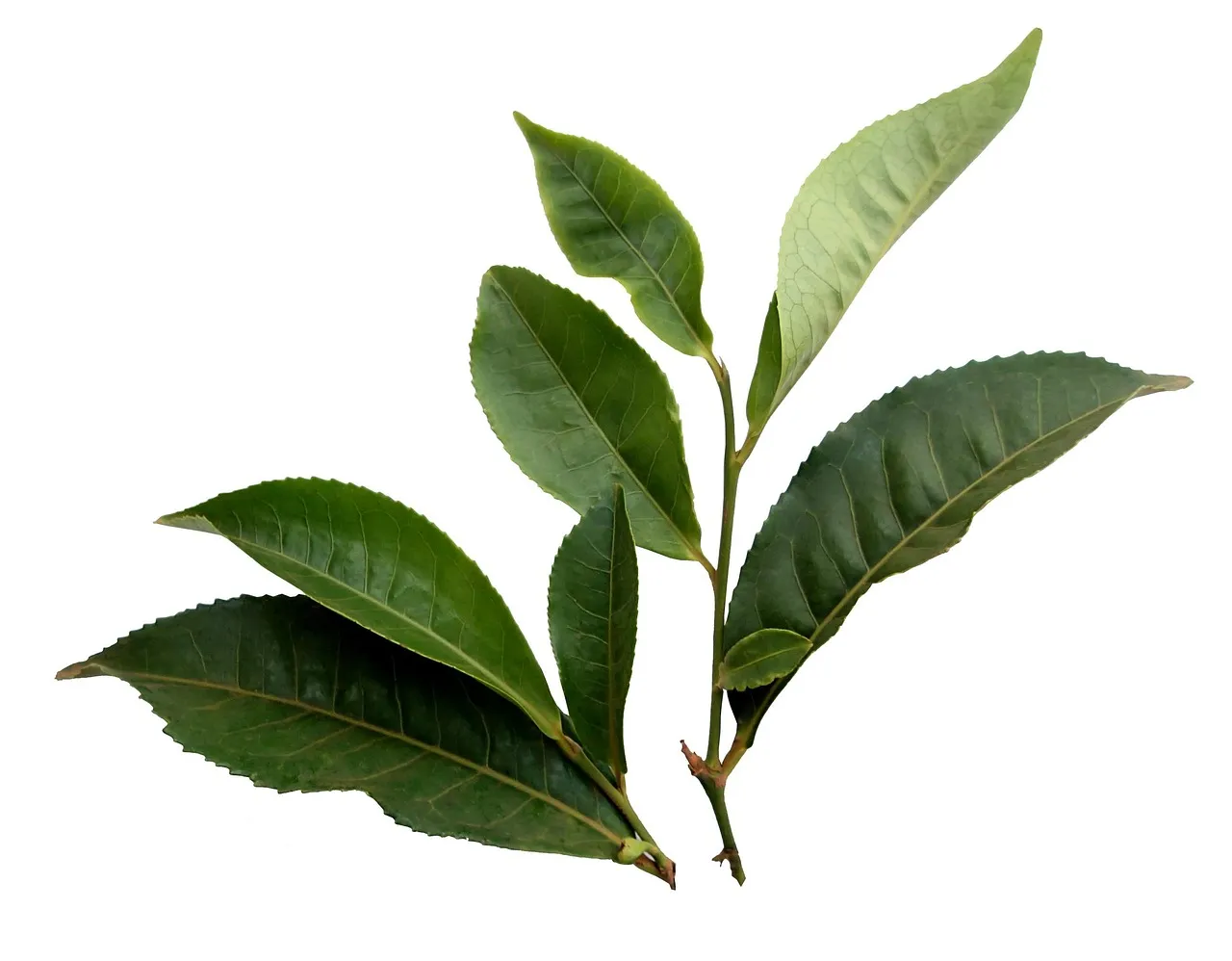
All true tea comes from Camellia sinensis, an evergreen shrub in the camellia family. Left alone it grows into a small tree several metres tall, but on plantations it is pruned into waist-high bushes so that pickers can reach the youngest shoots. Those shoots, usually a bud and the two leaves below it, are what end up in your cup.
There are two main varieties:
- Camellia sinensis var. sinensis, the Chinese variety, has small, tough leaves and copes with cold winters and high altitudes. It is used for most green, white and oolong teas, and for many Chinese black teas and Darjeeling.
- Camellia sinensis var. assamica, the Assam variety, has large, soft leaves and prefers hot, humid lowlands. It is behind the strong black teas of Assam, Kenya and much of Sri Lanka, and the traditional pu-erh of Yunnan.
Over centuries, growers have bred hundreds of cultivars from these two varieties. In Japan, for instance, the Yabukita cultivar covers most of the country’s tea fields, while Taiwan’s oolong farms grow cultivars like Qing Xin and Jin Xuan, each chosen for its aroma. A cultivar is to tea what a grape variety is to wine.
Where tea grows
Tea likes warmth, plenty of rain, acidic soil and good drainage, which is why so many of the best gardens sit on steep hillsides. Altitude matters: at higher elevations the bushes grow more slowly, and slow growth tends to concentrate aroma. Mist and cloud cover soften the sun and help to keep leaves tender.
China grows more tea than any other country, followed by India. Kenya is the world’s largest exporter of black tea, and Sri Lanka, Vietnam, Turkey, Indonesia and Japan are all major producers. Smaller but respected origins include Taiwan, Nepal, Korea, Malawi, Rwanda and Georgia. There are even experimental tea gardens in Scotland, Cornwall and the Netherlands.
Origin shapes flavour in the same way it does for wine or coffee. The French call it terroir: the combination of soil, climate, altitude and local craft. A Darjeeling picked in the Himalayan foothills in spring tastes nothing like an Assam grown in the flat, hot Brahmaputra valley a few hundred kilometres away, even though both are called black tea.
Seasons and flushes
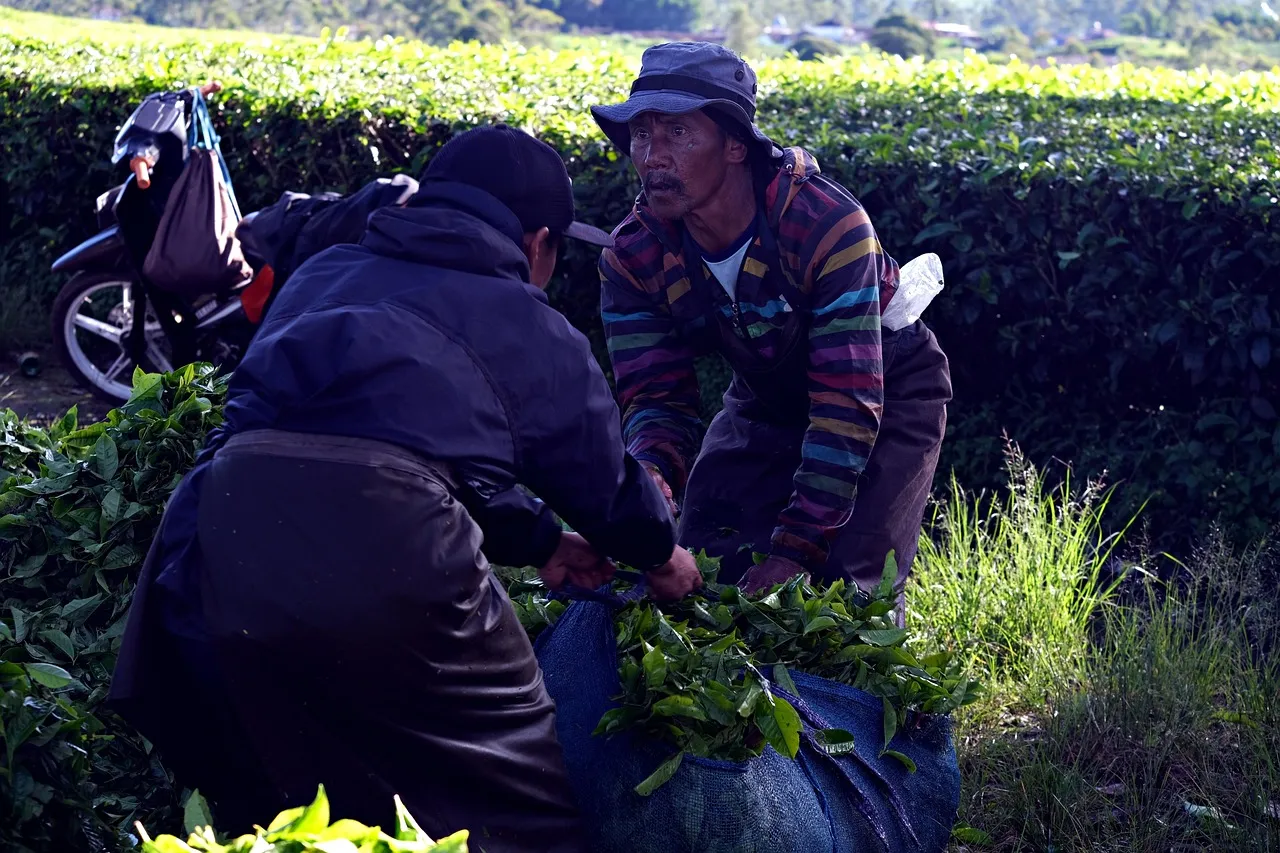
Tea bushes produce new growth in waves called flushes. In Darjeeling the first flush arrives in early spring and gives light, flowery teas; the second flush in early summer brings fuller, more muscatel-like teas; autumn flush teas are rounder and mellower. In China and Japan, the earliest spring pickings are prized in the same way. Chinese green teas picked before the Qingming festival in early April are sold as Mingqian, “before Qingming”, and command high prices.
From leaf to tea: how tea is made
Fresh tea leaves taste bitter and vegetal and would rot within days. Processing turns them into something stable, aromatic and delicious. The steps vary by type, but most teas go through some version of the following.
- Plucking. Shoots are picked by hand or by machine. The finer the plucking, the fewer and younger the leaves, and the higher the quality.
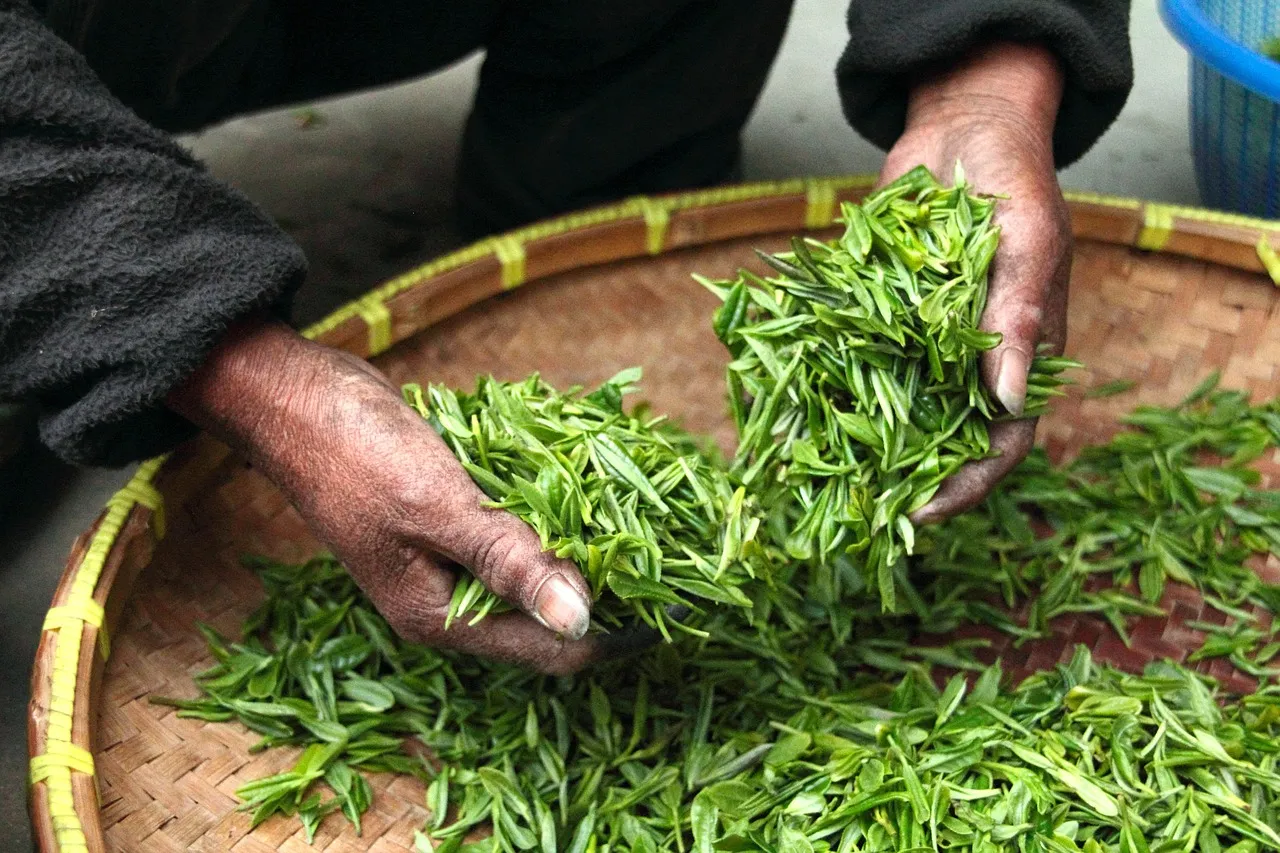
- Withering. Leaves are spread out on racks or in troughs to lose moisture and soften, which makes them flexible enough to roll without breaking.
- Rolling or shaping. Rolling bruises the leaf and breaks its cell walls, releasing the juices and enzymes that drive flavour. It also gives each tea its shape: twisted, curled, pressed flat, needle-thin or rolled into tight balls.
- Oxidation. Once the cells are broken, enzymes in the leaf react with oxygen and the leaf darkens, much like a cut apple turning brown. This step decides, more than any other, what kind of tea you end up with.
- Fixing or “kill-green”. Heat, in a hot pan, a drum or with steam, stops oxidation at the chosen point. Green tea is fixed almost immediately; black tea is not fixed at all but left to oxidise fully.
- Drying. Finally the leaves are dried until only a few per cent of moisture remains, so that they keep for months.
Oxidation explained
Oxidation is the simplest way to understand the difference between tea types. Picture a scale from zero to one hundred:
- Green tea is heated straight after picking, so it stays close to zero. The leaves remain green and the flavour stays fresh, grassy or nutty.
- Oolong is deliberately stopped somewhere in the middle, anywhere from around 10 to 80 per cent. Lightly oxidised oolongs are floral and buttery; heavily oxidised and roasted ones taste of stone fruit, honey and toast.
- Black tea is oxidised all the way. The leaves turn dark brown and the flavour becomes malty, brisk and sometimes chocolatey.
White tea and dark tea sit a little outside this scale. White tea is simply withered and dried with as little handling as possible, so it oxidises slowly and only slightly. Dark teas such as pu-erh go through microbial fermentation and ageing after they are made, which is a different process altogether.
The colour of the brewed cup follows the same path from pale to deep. That is what the colour scale on this site shows:
Whole leaf, broken leaf and tea bags
How tea is graded matters for how it tastes. Whole-leaf teas, where the leaves are intact after processing, release flavour slowly and can often be steeped more than once. Broken-leaf grades brew faster and stronger. Fannings and dust, the smallest particles, brew very quickly and very strongly, which is why they are used in most tea bags.
Much of the world’s everyday black tea is made by a method called CTC, for crush, tear, curl. Machines chop the withered leaf into small, hard granules that give a dark, brisk cup in a couple of minutes. CTC tea is perfect with milk and is the backbone of most breakfast blends and Indian chai. Tea made with the slower orthodox method keeps its leaf shape and generally offers more complexity.
Neither is wrong. But if you have only ever drunk tea from bags, loose whole-leaf tea can be a revelation, and many tea subscriptions exist precisely to introduce people to it.
What is in a cup of tea?
Tea contains several hundred compounds. A few matter most to how it tastes and how it makes you feel.
- Caffeine. A cup of tea typically contains somewhere between 20 and 60 milligrams of caffeine, depending on the leaf, the amount you use and how long you steep it. A cup of filter coffee usually has more. Contrary to a popular belief, green tea is not always low in caffeine and black tea is not always high; the young buds used in some white and green teas can be among the most caffeinated parts of the plant.
- L-theanine. An amino acid found almost only in tea. It is responsible for part of the savoury, brothy umami taste in Japanese green teas, and it is often associated with the calm, focused alertness many tea drinkers describe.
- Polyphenols. A large family of compounds, including catechins in green tea and theaflavins and thearubigins in black tea. They give tea its astringency, the dry, puckering feeling on your tongue, and much of its colour.
- Aromatic compounds. Hundreds of volatile molecules create tea’s scent, from the floral notes in oolong to the malt in Assam. Many are created during withering and oxidation, which is why processing matters as much as the plant itself.
Herbal infusions and blends
Alongside true tea, most tea shops, and most tea subscriptions, sell a wide range of other things to steep:
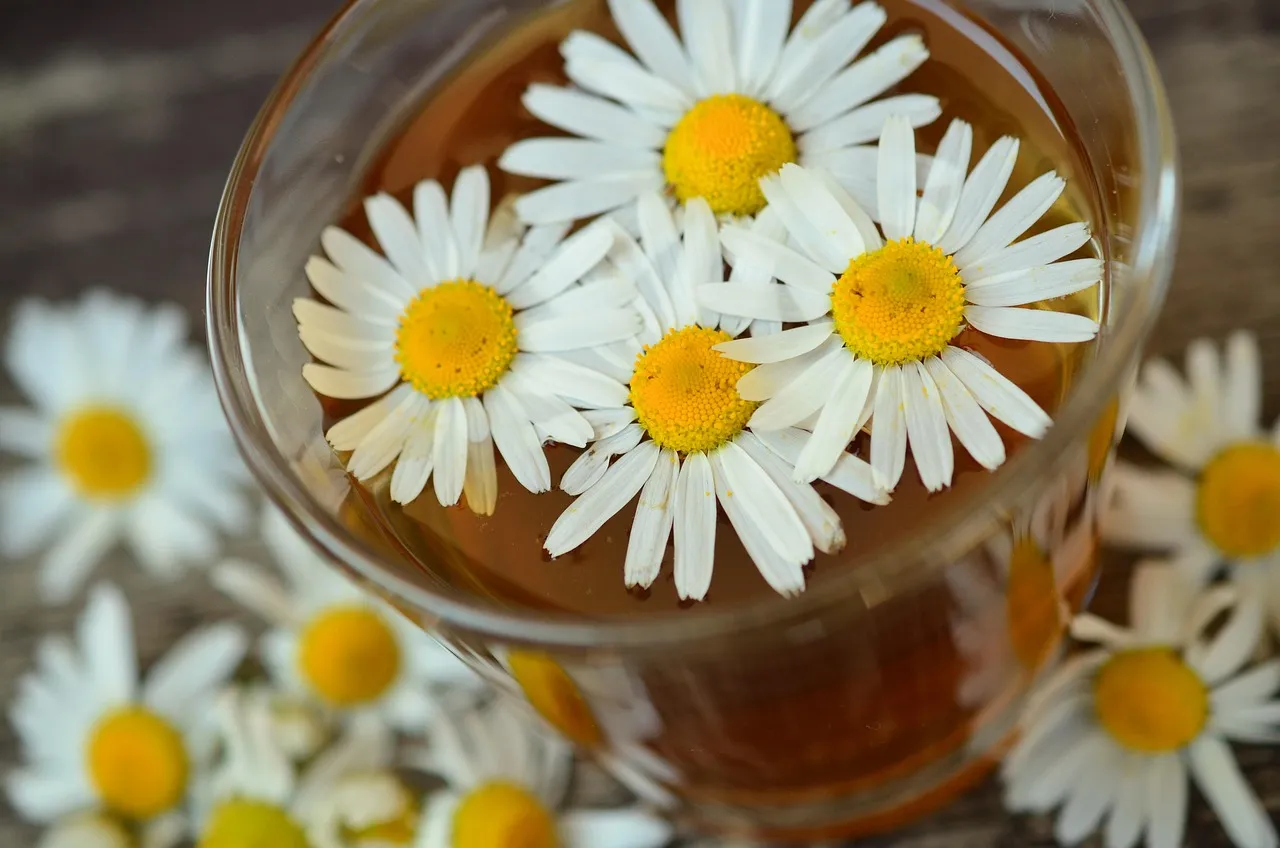
- Herbal infusions such as chamomile, peppermint, lemon balm, ginger and hibiscus. They contain no caffeine unless something is added.
- Rooibos and honeybush, both from South Africa. Rooibos is naturally caffeine-free, sweet and slightly nutty, and takes milk well.
- Flavoured teas, true tea mixed with flowers, spices, fruit or oils. Earl Grey (black tea with bergamot), jasmine tea (green tea scented with jasmine blossoms) and masala chai (black tea with spices) are the classics.
Now that you know what tea is, the next chapter looks at how it spread from a corner of south-west China to almost every kitchen in the world.
Common questions
Do all teas come from the same plant?
Yes. White, green, yellow, oolong, black and dark teas such as pu-erh all come from the leaves of Camellia sinensis. The differences come from how the leaves are processed after picking, above all how much they oxidise.
Is herbal tea really tea?
Not botanically. Chamomile, peppermint, rooibos and fruit infusions contain no Camellia sinensis, so the precise name is tisane or herbal infusion. Most are naturally caffeine-free.
How much caffeine is in a cup of tea?
Usually between 20 and 60 milligrams, depending on the leaf, the amount used and the steeping time. That is typically less than a cup of filter coffee.
What is the difference between loose leaf tea and tea bags?
Loose leaf tea is usually whole leaves that release flavour slowly and can be steeped more than once. Most tea bags hold small broken pieces called fannings or dust, which brew fast and strong but with less complexity.